
Road Signage and Their Meaning: A Comprehensive Guide
Belgian road signs, often detailed in PDF guides, utilize triangular shapes with red borders to alert drivers to potential hazards. These signs demand adaptation and vigilance.

Warning signs, including those for speed bumps, steep descents, and pedestrian crossings, require drivers to adjust their speed and actions accordingly, ensuring road safety.
Placement varies; in urban areas, these signs appear 50 meters before the danger, while rural locations require a 150-meter warning distance for driver preparedness.
New signage, like those in France and Germany, focuses on protecting vulnerable road users – cyclists, motorcyclists – and clarifying urban entry regulations for all.
Road signage forms a universal language for drivers, transcending linguistic barriers to ensure safety and order on roadways globally. Comprehensive guides, often available in PDF format, detail the intricacies of these visual cues, offering invaluable resources for both novice and experienced motorists. These systems aren’t merely decorative; they are legally mandated communications, designed to prevent accidents and facilitate smooth traffic flow.
Understanding road signs is paramount for responsible driving. Belgian regulations, for example, emphasize the critical role of triangular signs with red borders, instantly signaling potential dangers. These aren’t simply suggestions; they demand a driver’s immediate attention and a corresponding adjustment in behavior – be it reducing speed, increasing vigilance, or preparing to yield.
The standardization of road signage is a relatively recent development, evolving alongside the growth of automobile travel. Early systems were often inconsistent, leading to confusion and increased risk. Modern systems, like those detailed in official PDF manuals, prioritize clarity and uniformity, employing universally recognized symbols to convey meaning effectively. These guides often include exercises to test comprehension, reinforcing learning and promoting safer driving habits.
From warning of speed bumps and hazardous descents to indicating pedestrian crossings, each sign serves a specific purpose, contributing to a collective understanding of road conditions and potential hazards. Ignoring these signals isn’t just reckless; it’s often illegal, carrying potential fines and, more importantly, risking lives.

Importance of Understanding Road Signs
Comprehending road signs isn’t simply about passing a driving test; it’s a fundamental aspect of responsible vehicle operation and a crucial element in preventing accidents. Detailed PDF guides outlining road signage and their meanings are essential resources for all drivers, reinforcing the importance of visual communication on the road.
Ignoring or misinterpreting these signals can have severe consequences. As highlighted in Belgian regulations, triangular signs with red borders aren’t merely warnings – they demand immediate action. Failing to recognize a potential hazard, like a speed bump or pedestrian crossing, can lead to collisions, injuries, and even fatalities.
The value of understanding road signs extends beyond personal safety. It contributes to the overall efficiency of the traffic flow, reducing congestion and minimizing delays. Drivers who are aware of upcoming conditions – such as a hazardous descent – can adjust their speed proactively, preventing sudden braking and maintaining a smoother, safer journey for everyone.
Furthermore, familiarity with newer or less common signs, often detailed in updated PDF manuals, is vital. Recent changes in France and Germany, for example, introduce signage aimed at protecting cyclists and clarifying urban access, requiring drivers to stay informed and adapt to evolving regulations. Ultimately, knowledge of road signs empowers drivers to make informed decisions and navigate roadways safely and confidently.
Categorization of Road Signs
Road signs, comprehensively detailed in PDF documentation on panneaux de signalisation routière et leur signification, are systematically categorized to facilitate quick and accurate interpretation by drivers. This categorization isn’t arbitrary; it’s designed to leverage universally understood visual cues and logical groupings.
The primary division falls into three main types: warning signs, regulatory signs, and information signs. Warning signs, typically triangular with red borders, alert drivers to potential hazards – speed bumps, pedestrian crossings, or dangerous curves – demanding increased vigilance. Regulatory signs, often circular or rectangular, dictate specific rules of the road, such as speed limits or prohibited maneuvers.
Information signs, encompassing directional, distance, and service indicators, provide guidance and assistance to drivers. These signs utilize symbols and text to convey essential information about destinations, distances, and available amenities. Understanding these categories is crucial for efficient road navigation.
Beyond these core types, emerging signage, like those recently introduced in France and Germany, adds layers to this categorization. These new signs address specific concerns – urban entry regulations or cyclist protection – and are often highlighted in updated PDF guides. A clear grasp of this categorization system, readily available in detailed manuals, is fundamental to safe and compliant driving.

Types of Warning Signs (Triangular Signs)
Triangular signs, detailed in PDF guides on panneaux de signalisation routière, signify potential dangers. Drivers must identify hazards and adapt actions accordingly for safety.
General Danger Signs ⎯ Red Bordered Triangles
Red-bordered triangular signs, comprehensively documented in panneaux de signalisation routière PDF resources, represent a crucial category of warning signage. These universally recognized symbols alert drivers to a broad spectrum of potential hazards ahead, demanding increased vigilance and a proactive adjustment of driving behavior. The red border immediately signifies a potential danger, prompting drivers to assess the situation and prepare to react.
These signs don’t specify the exact nature of the danger, but rather indicate that a hazard exists and requires attention. Drivers are expected to reduce speed and scan the road ahead for clues about the specific threat. Common examples include general curves, uneven road surfaces, or conditions that might affect vehicle control. Understanding these general warnings is fundamental to safe driving practices.

The placement of these signs is standardized, typically positioned 50 meters before the hazard in urban areas and 150 meters in rural settings, providing adequate warning time. Ignoring these signs can lead to dangerous situations, emphasizing the importance of recognizing and respecting their message. Detailed PDF guides provide visual examples and explanations for each sign, aiding in proper identification and response.
Specific Danger Signs: Speed Bumps & Hazardous Descent
Specific danger signs, detailed within panneaux de signalisation routière PDF guides, provide precise warnings about particular road hazards. Two prominent examples are signs indicating speed bumps (ralentisseurs) and hazardous descents. The speed bump sign, a triangular shape with a red border and a visual representation of bumps, mandates a significant reduction in speed to avoid vehicle damage and maintain control.
Similarly, the hazardous descent sign warns drivers of a steep downhill slope. This sign necessitates a shift to a lower gear to utilize engine braking, preventing excessive speed and potential loss of control. Ignoring these specific warnings can result in accidents or vehicle malfunctions. These signs are strategically placed to allow drivers sufficient reaction time.
PDF resources often include illustrations and explanations of the appropriate speed and driving techniques for navigating these hazards. Understanding the implications of each sign is crucial for safe driving. These aren’t merely suggestions; they are vital indicators requiring immediate driver response, ensuring both personal safety and the safety of others on the road.
Specific Danger Signs: Pedestrian Crossings
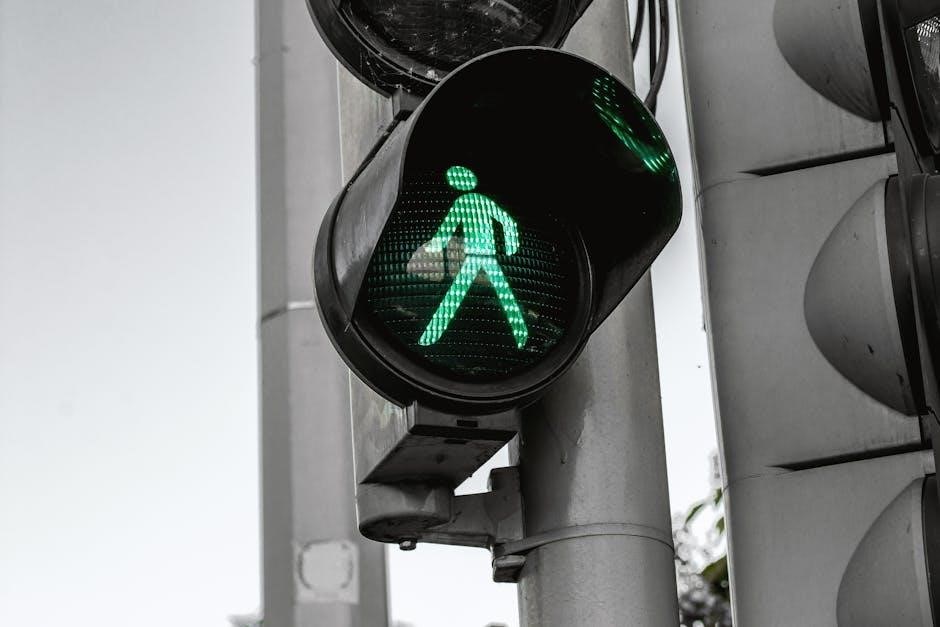
Pedestrian crossing signs, comprehensively detailed in panneaux de signalisation routière PDF documents, are crucial for road safety. These triangular signs, framed by a red border, alert drivers to areas where pedestrians are likely to be crossing the roadway. The sign typically depicts a silhouette of a walking person, instantly conveying the potential presence of vulnerable road users.
Drivers encountering this sign must significantly reduce speed and exercise extreme caution. They should actively scan for pedestrians, particularly children, who may enter the roadway unexpectedly. It’s essential to be prepared to stop, yielding the right-of-way to anyone attempting to cross. Ignoring this warning can lead to severe accidents and legal consequences.
PDF guides emphasize that these signs are often placed in advance of marked crosswalks, but also in areas with high pedestrian traffic even without formal crossings. Understanding the sign’s meaning and responding appropriately is paramount. These signs aren’t simply warnings; they represent a legal obligation to prioritize pedestrian safety, fostering a shared responsibility on the road.
Placement of Warning Signs ⎼ Urban vs. Rural Areas
Panneaux de signalisation routière PDF guides detail crucial distinctions in warning sign placement based on environment. In densely populated urban areas, warning signs – including those with red triangular borders – are strategically positioned approximately 50 meters before the hazard they indicate. This shorter distance acknowledges lower speed limits and increased driver attentiveness due to frequent intersections and pedestrian activity.
Conversely, in rural areas, where higher speeds are common and drivers may have fewer visual cues, warning signs are placed much further in advance – typically 150 meters before the hazard. This extended distance provides drivers with ample reaction time to assess the situation and adjust their speed or course accordingly. The increased distance is vital for preventing accidents.
These placement guidelines, thoroughly documented in official PDF resources, aren’t arbitrary. They’re based on extensive research into driver perception and reaction times. Consistent adherence to these standards ensures maximum effectiveness, maximizing road safety for all users. Understanding these differences is key to interpreting signage correctly.

Regulatory Signs
PDF guides detail regulatory signs dictating driver actions. Prohibitory signs state what’s forbidden, while mandatory signs outline required behaviors, ensuring legal compliance.
Prohibitory Signs ⎼ What You Cannot Do
Prohibitory signs, comprehensively documented in PDF resources on road signage, clearly communicate actions drivers are forbidden to take. These signs utilize a red circle with a diagonal red line striking through a symbol representing the prohibited maneuver. This universally understood iconography instantly conveys restrictions, ensuring road safety and order.
Common examples include signs prohibiting entry – often depicting a vehicle entering a space with a red circle and line – indicating roads or areas inaccessible to vehicles. Other frequent prohibitions involve speed limits, clearly displaying the maximum permissible speed. Signs also ban overtaking, often showing two vehicles attempting to pass with the red prohibition symbol.
Furthermore, prohibitions extend to specific vehicle types; signs may restrict access for heavy goods vehicles, motorcycles, or even pedestrians in certain zones. These regulations are vital for protecting infrastructure and vulnerable road users. Understanding these signs, as detailed in official PDF guides, is crucial for avoiding fines and, more importantly, preventing accidents. Ignoring these prohibitions can lead to dangerous situations and legal repercussions.
Mandatory Signs ⎯ What You Must Do
Mandatory signs, thoroughly explained in PDF guides detailing road signage, dictate actions drivers must undertake. These signs are typically characterized by a blue circle containing a white symbol, clearly indicating a required maneuver or behavior. They are fundamental to maintaining traffic flow and ensuring safety for all road users.
A prevalent example is the ‘compulsory direction’ sign, showing a curved arrow within the blue circle, forcing drivers to follow the indicated path. Another common sign mandates minimum speeds, ensuring traffic maintains a safe and consistent pace. Roundabouts are often indicated by a sign requiring drivers to circulate in a specific direction.
Furthermore, mandatory signs can specify the use of particular lanes or require drivers to keep to the right or left. These directives are crucial for navigating complex intersections and maintaining order. Detailed PDF documentation emphasizes the legal obligation to comply with these signs. Disregarding mandatory signs not only risks fines but also significantly increases the likelihood of collisions. Understanding these regulations, as presented in official resources, is paramount for responsible driving.
Priority Signs ⎼ Right of Way Rules
Priority signs, comprehensively detailed in PDF resources on road signage, govern right-of-way at intersections and junctions. These signs are crucial for preventing collisions and maintaining a smooth traffic flow. They clearly indicate which driver has the legal right to proceed first, minimizing confusion and potential hazards.
The ‘priority road’ sign, a yellow diamond, signifies that drivers on that road have precedence. Conversely, the ‘yield’ or ‘give way’ sign, an inverted triangle with a red border, instructs drivers to cede right-of-way to traffic on the intersecting road. Ignoring these signs is a primary cause of accidents.
Furthermore, ‘stop’ signs, octagonal and red, demand a complete halt before proceeding, ensuring a safe assessment of approaching traffic. PDF guides emphasize that drivers must yield to pedestrians and cyclists even when possessing right-of-way. Understanding the hierarchy of priority, as outlined in official documentation, is essential. These rules are not merely suggestions; they are legal requirements designed to safeguard all road users, and detailed explanations are readily available in official PDF manuals.

Information Signs
PDF guides detail information signs, providing directional guidance, distance indicators, and service locations. These signs assist drivers with navigation and locating essential facilities.

Directional Signs ⎼ Guiding Drivers
Directional signs, comprehensively documented in PDF resources on road signage, are crucial for navigating roadways effectively. These signs utilize clear symbols and text to indicate upcoming turns, route numbers, and destinations, assisting drivers in reaching their intended locations. They are designed for quick comprehension, minimizing driver confusion and promoting smoother traffic flow.
These signs often feature destination names, distances, and arrow indicators, providing essential guidance at intersections and along highways. The PDF guides emphasize the importance of standardized directional signage across different regions to ensure consistency and prevent misinterpretations. Variations exist, including advance directional signs placed well before junctions, offering ample time for lane changes and preparation.
Understanding the hierarchy of route numbers – interstates, highways, and local roads – is also detailed within these resources. Directional signs effectively communicate this hierarchy, helping drivers select the appropriate route based on their travel needs. Furthermore, the PDFs highlight the role of directional signs in guiding traffic towards specific services or points of interest, enhancing the overall driving experience and promoting tourism.
Distance Signs ⎼ Indicating Distances to Destinations
Distance signs, thoroughly explained in PDF guides concerning road signage, provide drivers with crucial information regarding the remaining distance to upcoming towns, cities, and key destinations. These signs are vital for trip planning and managing expectations during long journeys, contributing to safer and more informed driving.
Typically, these signs display the name of the destination alongside the distance measured in kilometers or miles, depending on the region. PDF documentation stresses the importance of accurate and regularly updated distance information to maintain driver trust and prevent navigational errors. Advance distance signs are strategically placed to offer sufficient warning, allowing drivers to prepare for exits or changes in route.
The guides also detail the conventions used for indicating distances to multiple destinations along a route. These conventions ensure clarity and prevent ambiguity, even when several locations are listed on a single sign. Understanding these signs, as outlined in the PDFs, is essential for efficient route following and minimizing unnecessary stops or detours, ultimately enhancing the overall driving experience.
Service Signs ⎯ Identifying Available Services
Service signs, comprehensively detailed within PDF resources on road signage, are designed to inform drivers about the availability of essential services along their route. These signs utilize universally recognized symbols to represent facilities such as fuel stations, restaurants, lodging, hospitals, and emergency assistance, promoting convenience and safety.
PDF guides emphasize the standardized nature of these symbols, ensuring consistent understanding across different regions and languages. The signs are strategically positioned in advance of the actual service location, providing drivers with ample time to plan and prepare. Different colors often denote the type of service; for example, blue typically indicates general services, while green signifies rest areas.
Detailed PDF documentation also covers variations in service sign design based on local regulations. Understanding these nuances is crucial for drivers navigating unfamiliar territories. These signs aren’t merely conveniences; they are vital for managing long journeys, addressing emergencies, and ensuring a comfortable and secure travel experience, as thoroughly explained in the available resources.
New and Emerging Road Signs
PDF guides now detail evolving signage in France, Germany, and Belgium, focusing on cyclist protection, urban access, and weather alerts. These changes enhance safety.
Recent Signage Changes in France ⎼ Urban Entry Signs
Recent updates to French road signage, often documented in comprehensive PDF guides detailing panneaux de signalisation routière et leur signification, involve the introduction of new signs at urban entries. These aren’t simply aesthetic changes; they signify a shift in how access to cities and villages is regulated and communicated to drivers.
Many drivers remain unaware of the true meaning behind these new signs, highlighting a crucial need for increased public awareness campaigns and readily available informational resources. The purpose of these signs is to clearly indicate zones with specific access restrictions or priority measures.
These new urban entry signs often denote areas prioritizing public transport, taxis, and carpool vehicles, as exemplified by a dedicated two-lane section on the road to Lacanau near Bordeaux. This aims to encourage sustainable transportation options and reduce congestion within urban centers. Understanding these nuances, as detailed in the official PDF documentation, is vital for compliant and safe navigation.
The implementation of these signs reflects a broader trend towards smarter, more sustainable urban mobility strategies across France, and clear understanding of the signage is paramount.
New German Signage ⎯ Protecting Cyclists and Motorcyclists
Germany has recently introduced new road signage, meticulously detailed in official panneaux de signalisation routière et leur signification PDF guides, specifically designed to enhance the safety of cyclists and motorcyclists. This innovative signage is causing some confusion amongst European drivers unfamiliar with the updated regulations.
The core function of this new sign is to prohibit vehicles from overtaking cyclists and motorcyclists, creating a safer riding environment. This restriction aims to mitigate the risks associated with close passes and potential collisions, particularly on roads with limited visibility or higher traffic volumes.
The implementation of this signage reflects a growing commitment to vulnerable road user protection within Germany’s transportation policy. Drivers encountering this sign must adjust their driving behavior, maintaining a safe following distance and refraining from overtaking maneuvers. Detailed explanations and visual representations are readily available within the official PDF documentation.
Understanding this new signage is crucial for all drivers traveling in Germany, ensuring compliance with the law and contributing to a safer road network for everyone.
Unique Signage ⎯ Bavarian A9 Highway
A truly unique piece of road signage exists exclusively on the A9 highway in Bavaria, Germany, a detail often found within comprehensive panneaux de signalisation routière et leur signification PDF resources. This distinctive sign isn’t replicated anywhere else in the country, making it a local peculiarity for drivers.
Located specifically between Pfaffenhofen and the Holledau interchange, this singular sign marks a specific section of the A9. Its presence indicates a particular road condition or regulation unique to that stretch of highway. While the exact purpose isn’t widely publicized, it serves as a localized warning or instruction.
Drivers encountering this sign should pay close attention to their surroundings and anticipate potential changes in road conditions or traffic flow. Official PDF guides detailing Bavarian road signage may offer further clarification, though information remains somewhat limited.
The A9’s unique sign exemplifies how regional variations can exist within national road networks, highlighting the importance of staying informed and observant while driving.
Belgian Weather-Related Signage

Belgium is proactively implementing new road signage focused on weather-related hazards, details of which are increasingly included in updated panneaux de signalisation routière et leur signification PDF documents. This initiative addresses the country’s frequently changeable weather conditions and aims to enhance driver safety.
These signs alert motorists to potential dangers stemming from adverse weather, such as fog, heavy rain, snow, or icy conditions. They provide timely warnings, allowing drivers to adjust their speed and driving style accordingly. The signs are designed to be easily recognizable and understandable, even at a distance.
The introduction of these weather-specific signs reflects a commitment to improving road safety through clear and concise communication. Comprehensive PDF guides now feature these additions, ensuring drivers are aware of the latest regulations and warnings.
Staying informed about Belgian road signage, particularly weather-related warnings, is crucial for safe travel. Regularly consulting official PDF resources is highly recommended.
No Responses